
Skip to content
Aligned Metrics Initiative

Pre-publication version. PQMD is finalising the text. Layout, navigation and tools are ready for review.

PQMD / ALIGNED METRICS INITIATIVE

How product donations contribute to care

A theory of change with shared activities and distinct evidence of contribution.

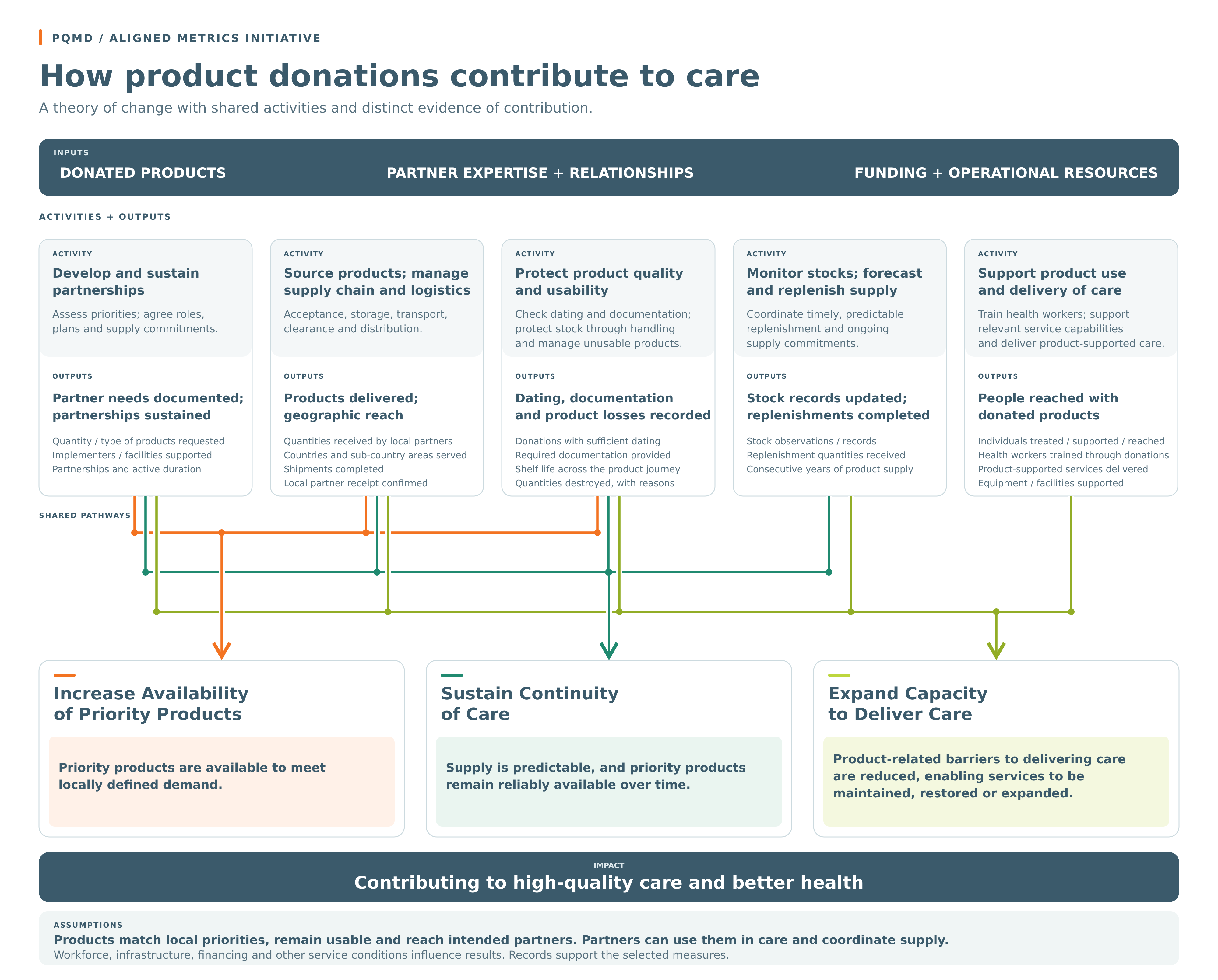
AMI theory of change: how product donations contribute to care Five paired activity and output groups feed three complementary areas of contribution. Shaded statements describe priority products meeting local demand, predictable and reliable supply, and reduced product-related barriers enabling services to be maintained, restored or expanded. All three areas contribute to high-quality care and better health. PQMD / ALIGNED METRICS INITIATIVE How product donations contribute to care A theory of change with shared activities and distinct evidence of contribution. INPUTS DONATED PRODUCTS PARTNER EXPERTISE + RELATIONSHIPS FUNDING + OPERATIONAL RESOURCES ACTIVITIES + OUTPUTS ACTIVITY Develop and sustain partnerships Assess priorities; agree roles, plans and supply commitments. ACTIVITY Source products; manage supply chain and logistics Acceptance, storage, transport, clearance and distribution. ACTIVITY Protect product quality and usability Check dating and documentation; protect stock through handling and manage unusable products. ACTIVITY Monitor stocks; forecast and replenish supply Coordinate timely, predictable replenishment and ongoing supply commitments. ACTIVITY Support product use and delivery of care Train health workers; support relevant service capabilities and deliver product-supported care. OUTPUTS Partner needs documented;partnerships sustained Quantity / type of products requestedImplementers / facilities supportedPartnerships and active duration OUTPUTS Products delivered;geographic reach Quantities received by local partnersCountries and sub-country areas servedShipments completedLocal partner receipt confirmed OUTPUTS Dating, documentationand product losses recorded Donations with sufficient datingRequired documentation providedShelf life across the product journeyQuantities destroyed, with reasons OUTPUTS Stock records updated;replenishments completed Stock observations / recordsReplenishment quantities receivedConsecutive years of product supply OUTPUTS People reached withdonated products Individuals treated / supported / reachedHealth workers trained through donationsProduct-supported services deliveredEquipment / facilities supported SHARED PATHWAYS Increase Availability of Priority Products Priority products are available to meetlocally defined demand. Sustain Continuity of Care Supply is predictable, and priority productsremain reliably available over time. Expand Capacity to Deliver Care Product-related barriers to delivering careare reduced, enabling services to bemaintained, restored or expanded. IMPACTContributing to high-quality care and better health ASSUMPTIONS Products match local priorities, remain usable and reach intended partners. Partners can use them in care and coordinate supply. Workforce, infrastructure, financing and other service conditions influence results. Records support the selected measures.

Text version

INPUTS

  • DONATED PRODUCTS
  • PARTNER EXPERTISE + RELATIONSHIPS
  • FUNDING + OPERATIONAL RESOURCES
  • Increase Availability of Priority Products

    Priority products are available to meet locally defined demand.

    SHARED PATHWAYS Develop and sustain partnerships Source products; manage supply chain and logistics Protect product quality and usability

  • Sustain Continuity of Care

    Supply is predictable, and priority products remain reliably available over time.

    SHARED PATHWAYS Develop and sustain partnerships Source products; manage supply chain and logistics Protect product quality and usability Monitor stocks; forecast and replenish supply

  • Expand Capacity to Deliver Care

    Product-related barriers to delivering care are reduced, enabling services to be maintained, restored or expanded.

    SHARED PATHWAYS Develop and sustain partnerships Source products; manage supply chain and logistics Protect product quality and usability Monitor stocks; forecast and replenish supply Support product use and delivery of care

SHARED PATHWAYS

ACTIVITIES + OUTPUTS

  1. ACTIVITY

    Develop and sustain partnerships

    Assess priorities; agree roles, plans and supply commitments.

    OUTPUTS

    Partner needs documented; partnerships sustained

    • Quantity / type of products requested
    • Implementers / facilities supported
    • Partnerships and active duration
  2. ACTIVITY

    Source products; manage supply chain and logistics

    Acceptance, storage, transport, clearance and distribution.

    OUTPUTS

    Products delivered; geographic reach

    • Quantities received by local partners
    • Countries and sub-country areas served
    • Shipments completed
    • Local partner receipt confirmed
  3. ACTIVITY

    Protect product quality and usability

    Check dating and documentation; protect stock through handling and manage unusable products.

    OUTPUTS

    Dating, documentation and product losses recorded

    • Donations with sufficient dating
    • Required documentation provided
    • Shelf life across the product journey
    • Quantities destroyed, with reasons
  4. ACTIVITY

    Monitor stocks; forecast and replenish supply

    Coordinate timely, predictable replenishment and ongoing supply commitments.

    OUTPUTS

    Stock records updated; replenishments completed

    • Stock observations / records
    • Replenishment quantities received
    • Consecutive years of product supply
  5. ACTIVITY

    Support product use and delivery of care

    Train health workers; support relevant service capabilities and deliver product-supported care.

    OUTPUTS

    People reached with donated products

    • Individuals treated / supported / reached
    • Health workers trained through donations
    • Product-supported services delivered
    • Equipment / facilities supported

IMPACT

Contributing to high-quality care and better health

ASSUMPTIONS

Products match local priorities, remain usable and reach intended partners. Partners can use them in care and coordinate supply.

Workforce, infrastructure, financing and other service conditions influence results. Records support the selected measures.

PQMD Aligned Metrics Initiative

Print

What would you like to print?

Pages print in full colour, exactly as they appear here.

Choose what to print